Reporting takes days
The committee pack requires manual consolidation, formatting and follow-up each month.
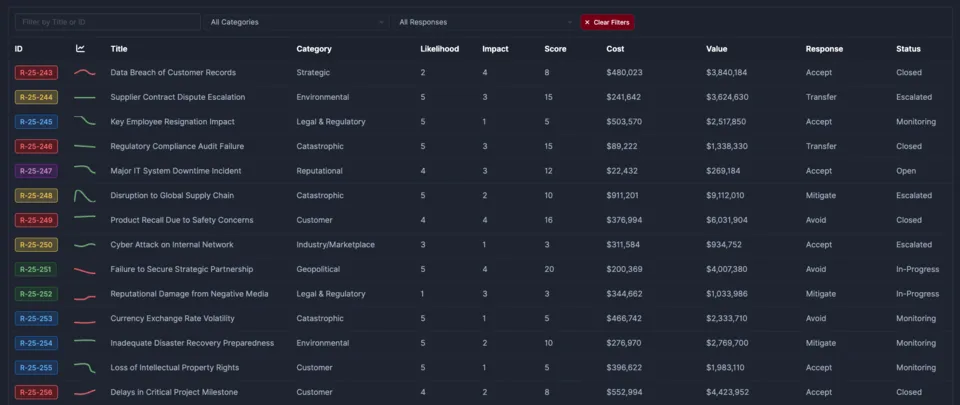
Spreadsheets are flexible and familiar. The problem starts when ownership, evidence, approvals and board reporting depend on one file being chased and rebuilt.

A spreadsheet may remain enough for a small, stable register. Malphara becomes relevant when the surrounding process matters as much as the rows.
| Capability | Generic spreadsheet | Malphara |
|---|---|---|
| Flexible risk fields | Easy to add, harder to govern consistently | Configured to the agreed taxonomy |
| Named ownership | Names in cells; follow-up happens elsewhere | Owners and actions stay connected to records |
| Change history | Version history may show edits, not decision context | Traceable records, evidence and commentary |
| Controls and findings | Separate tabs or files with manual links | Related risk, control, incident and audit records |
| Board reporting | Usually rebuilt for each reporting cycle | Reporting views built from live data |
| Alerts and due dates | Manual reminders and status chases | Owned actions and visible deadlines |
The committee pack requires manual consolidation, formatting and follow-up each month.
A name appears in the register, but the action, reminder and evidence live elsewhere.
Risks, controls, incidents and audit findings cannot be reviewed as one connected picture.
Implementation starts by deciding which fields, records and history still serve the process. The goal is not to recreate every spreadsheet convention.
Tell us where oversight is breaking down. We will reply within one working day with a focused agenda for a 30-minute discovery call.